3 Best AI Storyboarding Tools for Filmmakers
Plan your next film project with the 3 best AI storyboarding tools. Visualize scenes and camera angles with ease and precision.
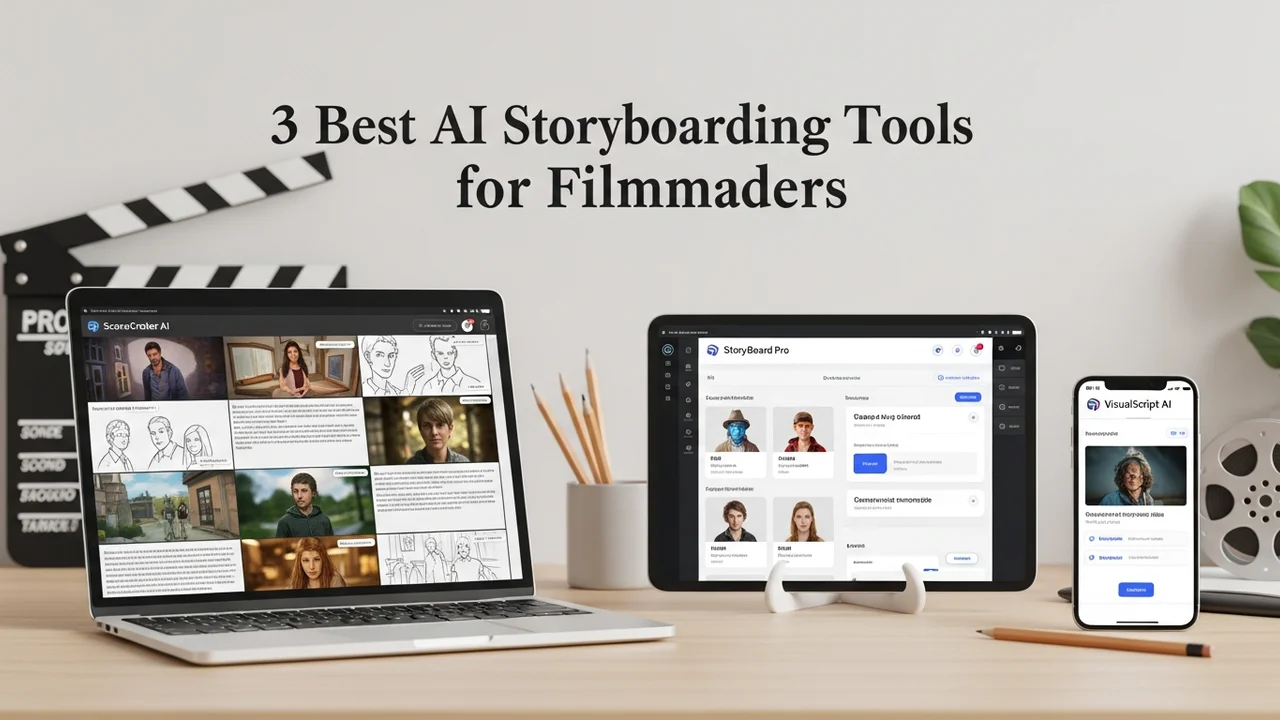
Plan your next film project with the 3 best AI storyboarding tools. Visualize scenes and camera angles with ease and precision.
3 Best AI Storyboarding Tools for Filmmakers
If you have ever spent hours sketching out frames for a film project only to realize your perspective is off or your character proportions are all over the place, you know the struggle of traditional storyboarding. It is the backbone of any great production, but let’s be honest, it is often the most tedious part of the pre-production process. Enter AI-powered storyboarding tools. These platforms are changing the game for indie filmmakers, commercial directors, and content creators by turning simple text prompts into professional-grade visual sequences. Whether you are planning a high-octane action scene or a subtle dialogue-heavy drama, these tools help you communicate your vision to your crew without needing a degree in fine arts.
Top AI Storyboarding Software Features and Capabilities
Modern AI storyboarding tools are not just about generating pretty pictures. They are about workflow integration. The best tools allow you to define camera angles, lighting conditions, and character consistency across multiple frames. Imagine typing 'wide shot of a detective walking through a rainy alleyway, neon lights reflecting on the ground' and getting a perfectly composed frame in seconds. This level of speed allows you to iterate on your shot list during pre-production meetings, saving you thousands of dollars in potential reshoots or miscommunications on set.
Comparing the Best AI Storyboarding Platforms
When looking for the right tool, you need to consider your specific needs. Some tools are built for speed and quick social media content, while others are designed for high-end film production with complex camera movement controls. Let’s dive into the top three contenders currently dominating the market.
Storyboarder AI for Rapid Visual Prototyping
Storyboarder AI is arguably the most accessible tool for beginners. It focuses on speed and ease of use. You simply input your script or scene description, and the AI generates a series of panels. It is fantastic for those who need to get a rough cut of their visual plan done in an afternoon. The interface is clean, and the learning curve is almost non-existent. It is priced at roughly $29 per month for the pro tier, making it a solid investment for freelancers.
ShotDeck AI Integration for Professional Cinematographers
For those who care deeply about lighting and color grading, ShotDeck is a powerhouse. While it is more of a reference library, its AI-driven search and organization features allow you to build storyboards based on real-world cinematic examples. You can find shots that match your exact vision and use them to guide your DP. It is a bit pricier, often around $40-$50 per month, but the quality of the visual references is unmatched in the industry.
Wonder Studio for Advanced Character Consistency
If your film involves VFX or complex character movements, Wonder Studio is the gold standard. It uses AI to automatically animate, light, and composite CG characters into your live-action plates. This is a game-changer for filmmakers who want to see how a creature or a digital character will interact with the environment before they even start filming. It is a premium tool, often requiring a custom quote for enterprise users, but for high-end production, it is worth every penny.
Practical Use Cases for AI Storyboarding in Film Production
Think about the last time you tried to explain a complex camera move to a producer. You probably used your hands and made weird 'whoosh' noises. With these AI tools, you can generate a 3D-rendered preview of that exact move. You can show them the camera height, the lens focal length, and the blocking of the actors. This clarity reduces anxiety on set and ensures that everyone is on the same page from day one. It is also incredibly useful for pitching projects to investors who might not have the imagination to see the final film just from a script.
Pricing and Subscription Models for Filmmakers
Most of these tools operate on a SaaS model. You are looking at a range of $20 to $100 per month depending on your needs. If you are a solo creator, the entry-level tiers are usually sufficient. However, if you are running a production house, you will want to look for team-based plans that allow for cloud collaboration. Always check if the tool offers a free trial, as the 'feel' of the AI generation can vary wildly between platforms. Some favor a more painterly, artistic style, while others lean toward photorealistic renders.
Choosing the Right Tool for Your Creative Workflow
At the end of the day, the best tool is the one that fits into your existing pipeline. If you use Adobe Premiere or DaVinci Resolve, look for tools that allow you to export your storyboards directly into your editing software. This seamless transition from storyboard to timeline is where the real magic happens. Don't get too caught up in the hype of the latest AI model; focus on the tool that helps you tell your story more clearly. Whether you are shooting a feature film or a YouTube vlog, these AI assistants are here to make sure your vision makes it from your brain to the screen exactly as you imagined it.
:max_bytes(150000):strip_icc()/277019-baked-pork-chops-with-cream-of-mushroom-soup-DDMFS-beauty-4x3-BG-7505-5762b731cf30447d9cbbbbbf387beafa.jpg)