3 Best AI Symptom Checkers for Quick Health Advice
Understand your health with the 3 best AI symptom checkers. Get reliable information and guidance on when to see a doctor.
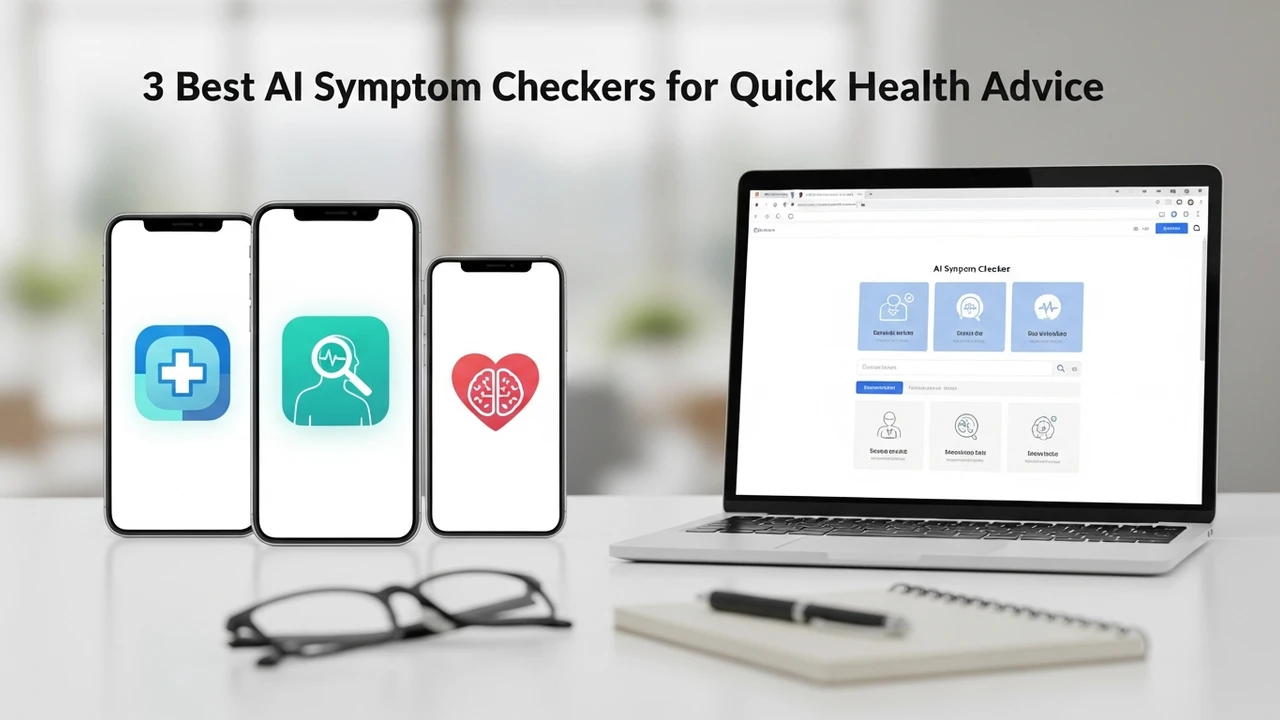
3 Best AI Symptom Checkers for Quick Health Advice
Understand your health with the 3 best AI symptom checkers. Get reliable information and guidance on when to see a doctor.
We have all been there. It is 2 AM, you have a weird ache in your side or a strange rash, and your first instinct is to jump onto Google. Five minutes later, you are convinced you have a rare tropical disease. This is where AI symptom checkers come in. They are not here to replace your doctor, but they are incredibly useful for getting a sense of what might be going on before you decide to head to the clinic or just get some rest.
Top AI Symptom Checker Apps for Health Monitoring
The landscape of digital health has exploded recently. AI-driven platforms now use massive datasets of clinical knowledge to help you navigate your symptoms. These tools ask you a series of questions—much like a triage nurse would—to narrow down potential causes. Let’s look at the three heavy hitters in this space: Ada, Babylon Health, and Symptomate.
Ada Health for Personalized Symptom Analysis
Ada is arguably the most popular choice for a reason. It feels like you are chatting with a very knowledgeable friend. When you open the app, it asks about your age, gender, and specific symptoms. What makes Ada stand out is its ability to handle complex, multi-symptom scenarios. If you have a headache, a fever, and a cough, it doesn't just look at them individually; it looks at the pattern. It is free to use for personal health tracking, which is a huge plus for most users.
Babylon Health for Virtual Consultations
Babylon takes things a step further. While it has a robust symptom checker, its real power lies in its integration with actual medical professionals. If the AI determines that your symptoms require attention, you can often book a video consultation directly through the app. It is a seamless bridge between digital triage and real-world care. Pricing varies depending on your insurance coverage and location, but the peace of mind is often worth the investment.
Symptomate for Rapid Clinical Assessment
If you want something fast and no-nonsense, Symptomate is your go-to. It is built by doctors and uses a very clinical, evidence-based approach. It is less about the "chatty" interface and more about getting you to a potential diagnosis quickly. It is excellent for those who want to know the probability of their symptoms being related to something common versus something that needs immediate ER attention. It is free to use and very accessible via web browser or mobile app.
Comparing AI Health Tools and Use Cases
Choosing the right tool depends on your specific needs. If you are a parent looking for quick advice on a child's fever, Ada’s interface is very reassuring. If you are a busy professional who needs a quick path to a doctor's note, Babylon’s integration is unbeatable. If you are a data-driven person who just wants the clinical facts, Symptomate is the most efficient. All three are significantly better than a random search engine result because they are trained on verified medical literature rather than SEO-optimized blog posts.
Safety and Privacy in AI Health Diagnostics
One thing you should always keep in mind is data privacy. These apps handle sensitive health information. Always check the privacy policy of the app you choose. Most of these companies are HIPAA-compliant or follow strict GDPR guidelines, meaning your data is encrypted and not sold to third parties. Remember, these tools are for guidance. If you are experiencing chest pain, difficulty breathing, or severe bleeding, skip the app and call emergency services immediately. AI is a tool for better health management, not a substitute for emergency medical intervention.
Integrating AI into Your Daily Wellness Routine
Using these apps doesn't have to be a reactive process. Many people use them to track recurring issues, like seasonal allergies or tension headaches. By logging your symptoms over time, you create a history that you can actually show your doctor during your next physical. It turns a vague "I've been feeling off" into a concrete report of "I've had these symptoms on these specific days." That kind of information is gold for any healthcare provider trying to help you feel your best.
:max_bytes(150000):strip_icc()/277019-baked-pork-chops-with-cream-of-mushroom-soup-DDMFS-beauty-4x3-BG-7505-5762b731cf30447d9cbbbbbf387beafa.jpg)