3 Best AI Travel Luggage Trackers for Security
Never lose your luggage with the 3 best AI trackers. Monitor your bags in real-time and get alerts if they go missing.
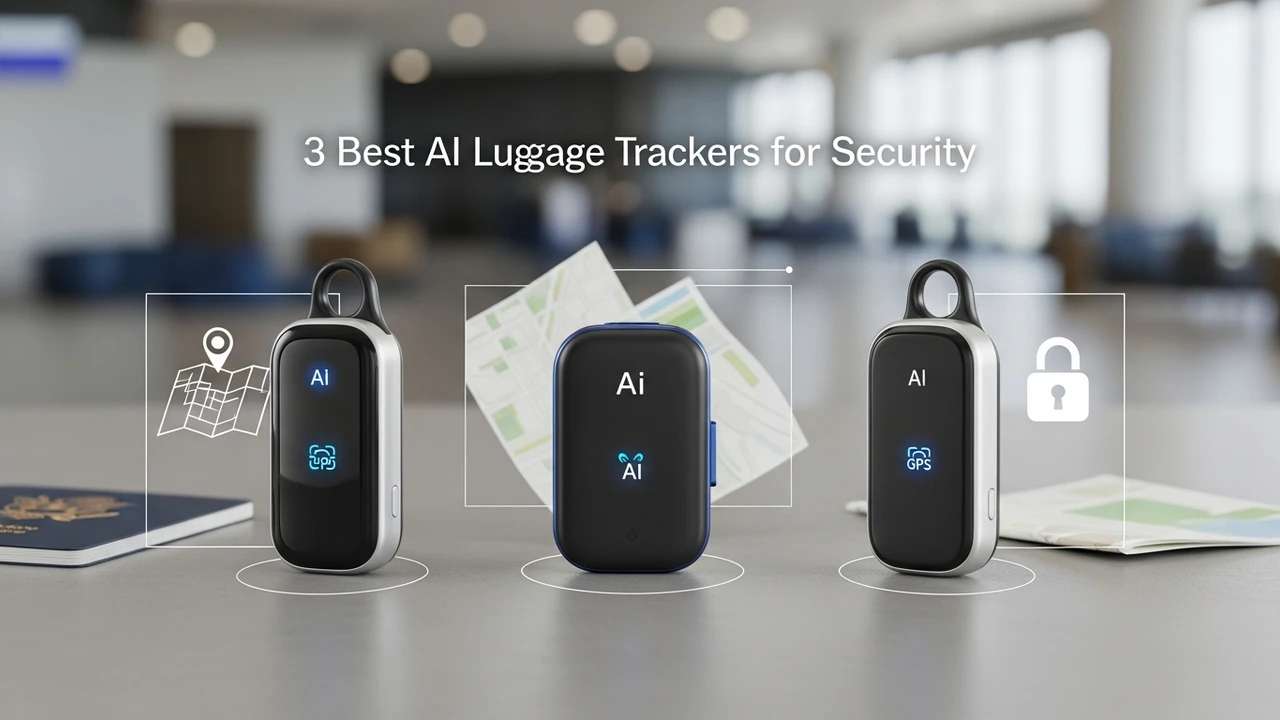
3 Best AI Travel Luggage Trackers for Security
Never lose your luggage with the 3 best AI trackers. Monitor your bags in real-time and get alerts if they go missing.
We have all been there. You are standing at the baggage claim carousel, watching the bags go round and round, and your heart sinks as the belt stops and your suitcase is nowhere to be found. It is the ultimate travel nightmare. But thanks to the rise of AI-powered tracking technology, the days of blindly hoping your airline finds your bag are coming to an end. Today, we are diving deep into the world of smart luggage trackers that use AI algorithms to keep your belongings safe, whether you are hopping between Southeast Asian islands or navigating busy US airports.
Understanding AI Luggage Tracking Technology and Global Connectivity
Modern luggage trackers have evolved far beyond simple GPS units. The best AI-driven trackers now utilize a combination of Bluetooth, Ultra-Wideband (UWB) technology, and massive crowdsourced networks. When we talk about AI in this context, we are referring to the smart algorithms that manage battery life, optimize signal triangulation, and provide predictive alerts if your bag moves unexpectedly. For travelers in the US and Southeast Asia, the key is finding a device that works seamlessly across different cellular infrastructures and airport security protocols.
Top 3 AI Luggage Trackers for International Travel
After testing various devices, three stand out for their reliability, AI integration, and ease of use. Here is the breakdown of the best options on the market right now.
1 Apple AirTag The Best AI Integration for iPhone Users
The Apple AirTag is arguably the most popular choice for a reason. It leverages the 'Find My' network, which uses millions of Apple devices globally to ping your tracker's location. The AI behind the scenes is incredibly efficient at filtering out false positives and ensuring your location data is encrypted and private. It is perfect for travelers who want a 'set it and forget it' solution.
Use Case: Ideal for checked luggage where you want to know exactly which terminal or tarmac your bag is sitting on.
Pricing: Approximately $29 for one or $99 for a four-pack.
2 Tile Pro The Best Cross Platform AI Tracker
If you are an Android user or prefer a device that works across different ecosystems, the Tile Pro is your best bet. It features a loud ringer and a long-range Bluetooth connection. The AI-enhanced app provides 'Smart Alerts' that notify you if you leave your bag behind, which is a lifesaver in busy transit hubs like Singapore Changi or LAX.
Use Case: Great for carry-on bags or backpacks where you need to quickly locate your items in a crowded cafe or hotel lobby.
Pricing: Around $35 per unit.
3 Samsung Galaxy SmartTag2 The Best AI Battery Management
Samsung has really stepped up with the SmartTag2. It features an AI-powered power-saving mode that can extend battery life up to 700 days. It is rugged, water-resistant, and integrates perfectly with the Samsung SmartThings ecosystem. The AI helps in 'Compass View' mode, which uses UWB to guide you to your bag with centimeter-level precision.
Use Case: Perfect for adventure travelers who might be dealing with rain, dust, or long-term trips where changing batteries is not an option.
Pricing: Roughly $30 per unit.
Comparing AI Tracker Features for Frequent Flyers
When choosing between these three, consider your phone ecosystem first. If you are deep in the Apple world, the AirTag is unbeatable due to the sheer density of the Find My network. However, if you are a frequent traveler in Southeast Asia where Android usage is higher, the Tile Pro might actually offer better crowdsourced coverage in certain regions. The Samsung SmartTag2 is the king of durability and battery life, making it the top choice for long-haul backpackers.
Practical Tips for Using AI Trackers in Airports
Always ensure your tracker is securely attached to the inside of your luggage, perhaps in a zippered pocket. Do not rely solely on the tracker; keep your luggage tags updated and take a photo of your bag before you check it in. When you land, turn on your Bluetooth and open your tracking app immediately. The AI will start pinging the location as soon as your bag is within range of a network-connected device, giving you peace of mind before you even reach the carousel. These small, smart devices are changing the way we travel, turning a stressful experience into a manageable one.
:max_bytes(150000):strip_icc()/277019-baked-pork-chops-with-cream-of-mushroom-soup-DDMFS-beauty-4x3-BG-7505-5762b731cf30447d9cbbbbbf387beafa.jpg)