5 Best AI Ergonomic Desk Setup Tools
Optimize your workspace with the 5 best AI ergonomic tools. Prevent pain and increase comfort with smart desk and chair recommendations.
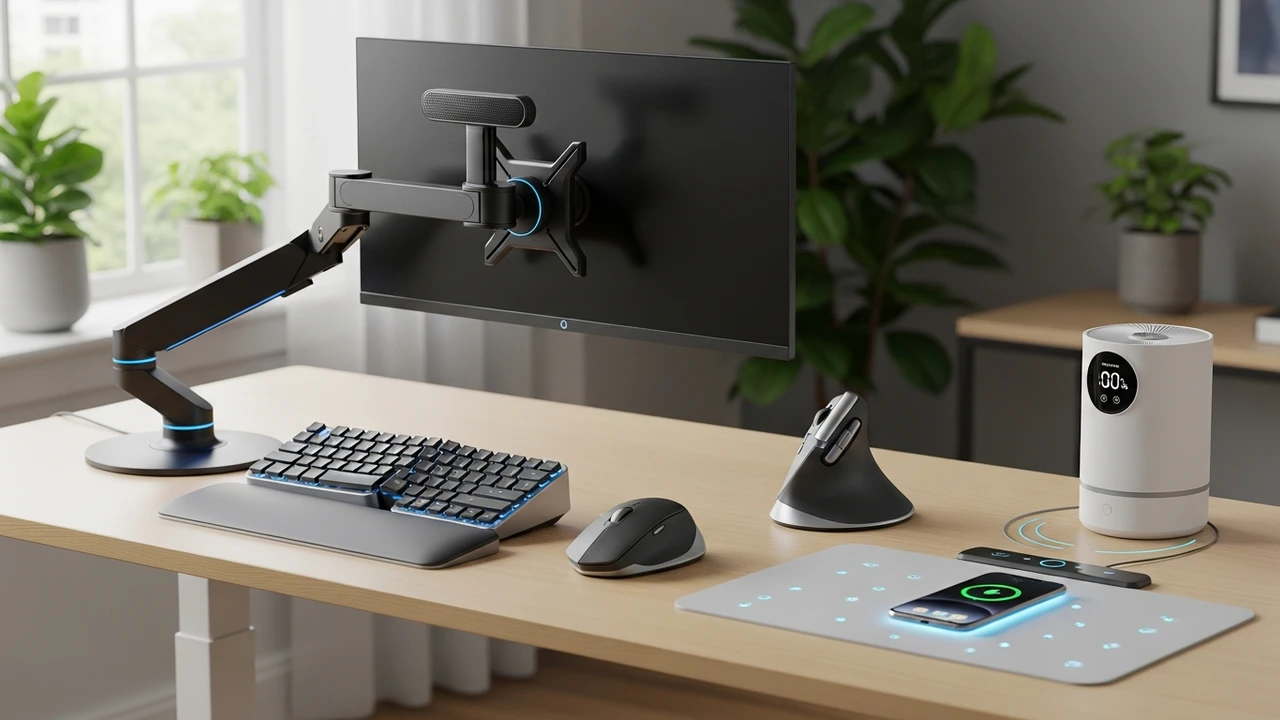
Optimize your workspace with the 5 best AI ergonomic tools. Prevent pain and increase comfort with smart desk and chair recommendations.
5 Best AI Ergonomic Desk Setup Tools
If you have been spending eight or more hours a day hunched over a laptop, you know the feeling. That dull ache in your lower back, the stiffness in your neck, and the creeping fatigue that makes you want to just collapse onto the couch. We have all been there. But here is the thing: your desk setup is not just furniture; it is your command center. And thanks to the latest wave of AI-driven ergonomic technology, you can finally turn that command center into a space that actually looks out for your physical health.
Why AI Ergonomic Desk Setup Tools Matter for Your Health
Traditional ergonomics is static. You buy a chair, you adjust the height, and you hope for the best. But your body changes throughout the day. You slouch, you lean, you shift. AI-powered tools change the game by being dynamic. They monitor your posture, track your movement, and even adjust your environment in real-time. It is like having a physical therapist sitting next to you, reminding you to sit up straight or suggesting you take a break before that back pain sets in.
Top 5 AI Ergonomic Desk Setup Tools for Productivity
Let’s dive into the gear that is actually worth your investment. We are looking at tools that bridge the gap between high-tech innovation and everyday comfort.
1. The Fully Jarvis AI Standing Desk
This is not just a desk that goes up and down. The Jarvis AI integration uses sensors to learn your habits. If you have been sitting for two hours, it gently nudges you—via a connected app—to switch to standing mode. It tracks your sit-stand ratio and provides data-driven insights on how to optimize your movement. It retails for around $800 to $1,200 depending on the surface material.
2. The Herman Miller Embody Gaming Chair with AI Posture Support
While marketed for gamers, this is a dream for office workers. It uses a matrix of pixels that distribute your weight evenly, and the AI-integrated app analyzes your sitting pressure points to suggest micro-adjustments. It is a premium investment at roughly $1,800, but for those with chronic back issues, it is a game-changer.
3. The Upright Go 2 Posture Trainer
This is a small, wearable device that sticks to your upper back. It uses AI to detect when you are slouching and gives a gentle vibration to remind you to correct your posture. It is incredibly affordable at about $99 and is perfect for people who need a subtle nudge throughout the day.
4. The Logitech MX Ergo AI-Enhanced Trackball
Wrist pain is the silent killer of productivity. This mouse uses AI to adapt to your hand movement patterns, reducing muscle strain by up to 20%. It is a must-have for designers and writers who spend hours clicking away. You can pick one up for around $100.
5. The VariDesk AI-Powered Monitor Arm
This monitor arm uses sensors to ensure your screen is always at the perfect eye level, regardless of whether you are sitting or standing. It prevents the dreaded 'tech neck' by automatically adjusting the tilt and height based on your posture. It usually runs about $250.
Comparing AI Ergonomic Solutions for Different Workspaces
When you look at these tools side-by-side, the choice comes down to your specific pain points. If you are struggling with back pain, the Herman Miller chair is the gold standard. If you are more concerned about your daily movement habits, the Fully Jarvis desk is the way to go. For those on a budget, the Upright Go 2 offers the most immediate feedback for the lowest price. The Logitech mouse and VariDesk arm are more about fine-tuning your existing setup rather than replacing your furniture.
Real World Usage Scenarios for AI Ergonomic Gear
Imagine you are a freelance developer. You start your day at 9 AM. Your Jarvis desk automatically raises to standing height for your morning stand-up meeting. As you transition to deep coding work, the desk lowers, and your Upright Go 2 reminds you to keep your shoulders back. By 2 PM, your Logitech mouse is helping you navigate complex interfaces without straining your wrist. By the time you finish your day, you don't feel that usual exhaustion because your environment has been working with you, not against you.
Investing in Your Future Comfort
The cost of these tools might seem high at first glance, but think about the long-term cost of physical therapy or chronic pain management. By integrating AI into your workspace, you are essentially buying back your health and energy. Start small—maybe with the posture trainer or the ergonomic mouse—and build your smart setup over time. Your body will thank you for it, and your productivity will likely see a massive boost as well.
:max_bytes(150000):strip_icc()/277019-baked-pork-chops-with-cream-of-mushroom-soup-DDMFS-beauty-4x3-BG-7505-5762b731cf30447d9cbbbbbf387beafa.jpg)